How to Make Pumpkin Seed Milk at Home
Make creamy, nut-free pumpkin seed milk by blending hulled pepitas with water; optional soaking, sweeteners, or straining. Store chilled up to 7 days.
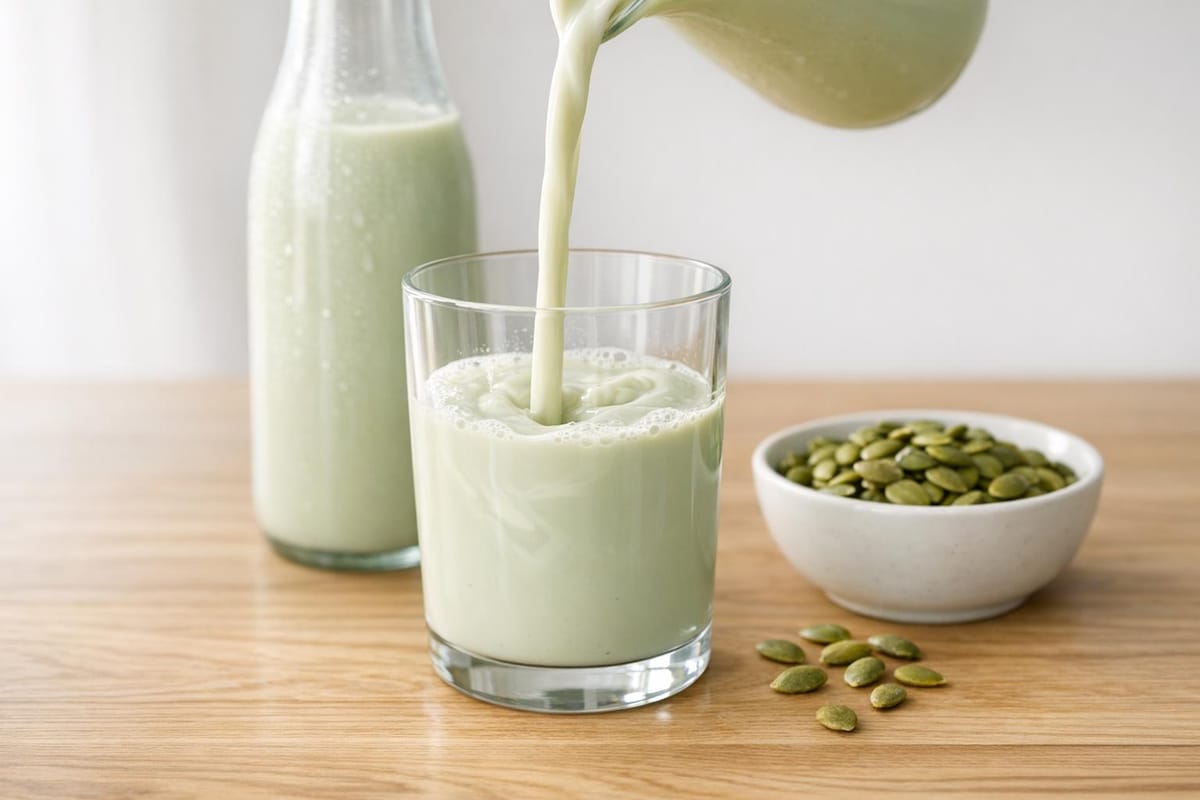
Pumpkin seed milk is a creamy, plant-based alternative to dairy that's made by blending raw pumpkin seeds (pepitas) with water. It's perfect for those avoiding dairy, nuts, soy, or gluten. This milk is high in protein, iron, zinc, and magnesium, making it a nutritious choice for coffee, smoothies, or baking. Here's a quick overview of the process:
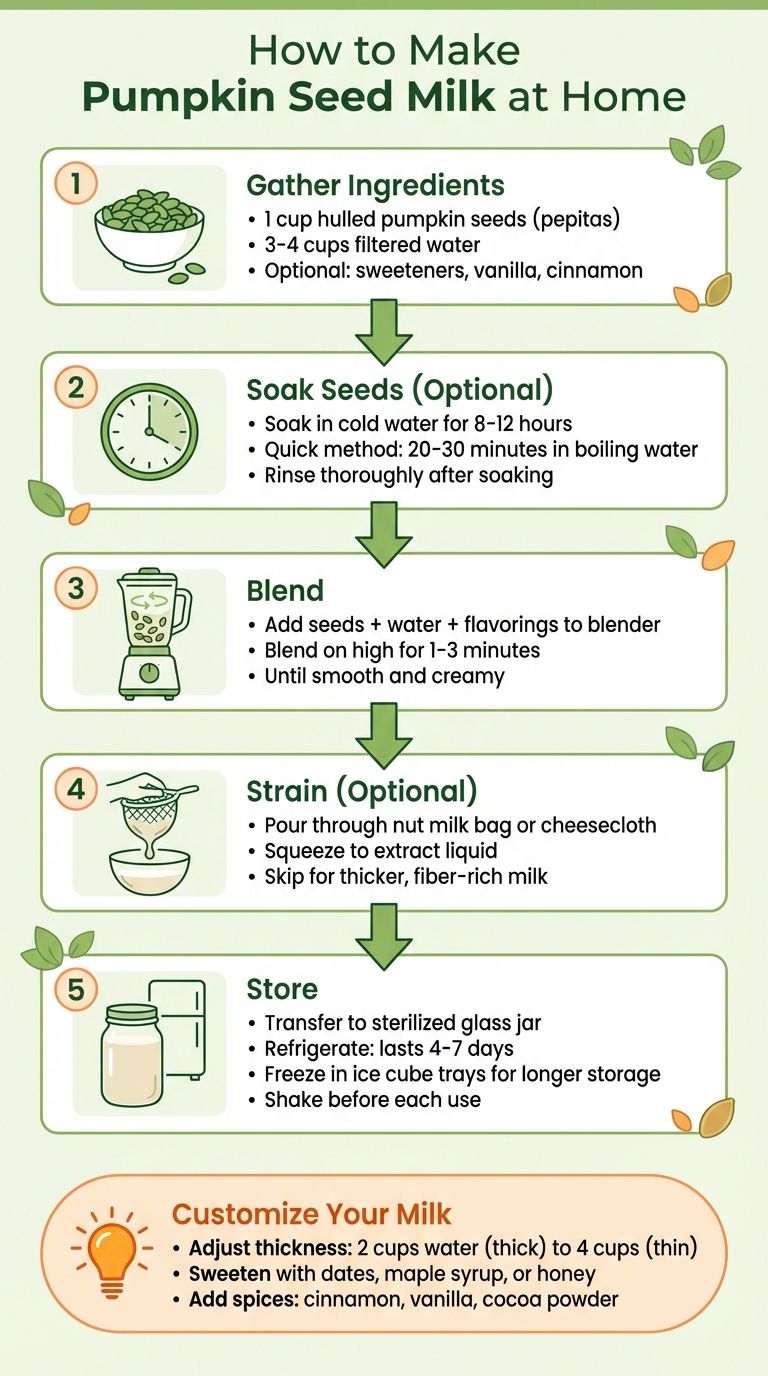
- Ingredients: Hulled pumpkin seeds, filtered water, optional sweeteners (like dates or maple syrup), and flavorings (vanilla, cinnamon, etc.).
- Soaking (Optional): Soak seeds for 8–12 hours to improve texture and reduce bitterness.
- Blending: Blend seeds with water and optional flavorings for 1–3 minutes.
- Straining (Optional): Use a nut milk bag or cheesecloth for a smoother texture.
- Storage: Refrigerate in sterilized glass jars for up to 7 days or freeze in ice cube trays.
Customize the flavor with spices, sweeteners, or even cocoa powder. Adjust the thickness by changing the water ratio or skipping the straining step. Pumpkin seed milk is easy to make, nutritious, and works in both sweet and savory recipes.
How to Make Pumpkin Seed Milk: Step-by-Step Process
HOW TO MAKE PUMPKIN SEED MILK😋No Straining, No Pulp💚Rich In Zinc 💚Dairy Free Vegan Plant Milk Recipe
What You'll Need
Before diving in, make sure you have everything ready. The process is simple, but having the right ingredients and tools on hand makes it even easier.
Ingredients
You'll need 1 cup of hulled pumpkin seeds (pepitas) and 3 to 4 cups of filtered water as the base. Stick with green, hulled seeds - unhulled ones can leave a bitter taste and gritty texture.
To boost flavor, consider adding natural sweeteners like maple syrup, Medjool dates, honey, or agave. You can also include a splash of vanilla extract, a pinch of sea salt, or spices like cinnamon or pumpkin pie spice. Want a thicker consistency? Toss in extras like banana, flaxseeds, or protein powder.
"I recommend sweetening it to balance the pumpkin seeds' bitterness." - Maggie Michalczyk, RDN
Equipment
A high-speed blender (like a Vitamix or NutriBullet) works best for creating smooth, creamy pumpkin seed milk. If you’re using a standard blender or food processor, pre-soaking the seeds can make the blending process easier. Straining is optional but helpful for a smoother texture.
For an ultra-silky, store-bought feel, strain the mixture using a nut milk bag, cheesecloth, or fine-mesh sieve. Store your milk in an airtight glass bottle or mason jar. To extend its shelf life to about a week, sterilize the container by boiling it in water for 3 minutes.
How to Make Pumpkin Seed Milk
Soaking the Seeds (Optional)
While soaking pumpkin seeds isn’t a must if you’re using a high-speed blender, it can improve both the texture and flavor of the milk. To soak, cover the seeds with cold water and let them sit for 8 to 12 hours or overnight. This step softens the seeds, reduces bitterness, and helps neutralize phytic acid, which can interfere with nutrient absorption.
In a rush? You can speed up the process by pouring boiling water over the seeds and letting them sit for 20–30 minutes. Once soaked, discard the soaking water and rinse the seeds thoroughly to wash away enzyme inhibitors.
"Soaking allows the pumpkin seeds to absorb water and soften so they'll break down better into smoother milk, release more flavor, and taste less bitter." - Foodaciously
Blending and Straining
Add your rinsed pumpkin seeds - soaked or unsoaked - to a high-speed blender along with 3 to 4 cups of filtered water. For added flavor, toss in sweeteners or spices like dates, vanilla, cinnamon, or a pinch of salt. Blend everything on high for 1 to 3 minutes until the mixture turns smooth and creamy.
To strain, pour the blended mixture into a nut milk bag or cheesecloth over a bowl. Gently twist and squeeze to extract as much liquid as possible. Prefer a thicker milk with extra fiber? Skip the straining step, but keep in mind it will have a slightly grainy texture.
Once strained, you’re ready to fine-tune the flavor and store your homemade milk.
Final Adjustments and Storage
Taste your milk and make any adjustments - add a bit of sweetener to balance bitterness or extra water to adjust the consistency. Transfer the milk into a sterilized glass bottle or mason jar and refrigerate it right away. Fresh pumpkin seed milk typically lasts 4 to 7 days, but if you used soaked seeds, it may only keep for 2 to 3 days.
Since homemade milk doesn’t include emulsifiers, you’ll need to shake it before each use. Got leftovers? Freeze the milk in ice cube trays and use the cubes in smoothies later.
Ways to Customize Your Pumpkin Seed Milk
Sweetening Options
Pumpkin seeds naturally have a slightly bitter, earthy flavor, but adding a sweetener can balance that out beautifully. Medjool dates are a favorite for many - they bring a caramel-like sweetness and contribute to a creamier texture. For every 4 cups of milk, use 2 to 4 dates. If your dates feel firm, soaking them along with the seeds can help them blend more smoothly.
If you're short on time, liquid sweeteners are a great alternative. For every 4 cups of milk, try adding 1 teaspoon to 2 tablespoons of maple syrup. Agave nectar works too - use 1 to 3 tablespoons per 3 cups of milk. Prefer a floral touch? Honey does the trick, though it’s not vegan-friendly. If you're following a sugar-free or keto plan, erythritol is a good option.
"I do recommend sweetening it as it helps to balance out the bitterness of all those pumpkin seeds!" - Maggie Michalczyk, RDN, Once Upon a Pumpkin
Here’s a tip: Add liquid sweeteners after straining the milk to avoid wasting any sweetness in the leftover pulp. And don’t stress - taste as you go and adjust until it’s just right.
Adding Flavors
Want to take your pumpkin seed milk up a notch? Adding spices or extracts can make all the difference. A touch of vanilla extract (1/2 to 1 teaspoon) before straining gives the milk a classic, aromatic flavor. For a cozier vibe, mix in 1 teaspoon of ground cinnamon or a pumpkin pie spice blend, which combines cinnamon, nutmeg, ginger, and cloves.
Feeling adventurous? Create a chocolate version by blending in 1 to 3 teaspoons of cocoa or cacao powder. Or, for a golden milk twist, add 1 teaspoon of turmeric. If you’re after a richer texture, stir in 1 tablespoon of almond butter or 1/4 cup of coconut milk for a creamy upgrade.
Changing the Thickness
Once you've nailed the flavor, tweaking the milk's thickness is simple. The ratio of seeds to water is the key. A standard mix of 1 cup of seeds to 3 cups of water gives you a creamy, versatile milk. Prefer something lighter? Use 4 cups of water. For an ultra-thick version - perfect as a coffee creamer - stick to 2 cups of water and skip the straining step.
Straining itself plays a big role in the texture. Strained milk is smooth and silky, while unstrained milk is thicker and retains more fiber. For extra creaminess, try blending the seeds with just 1/4 of the water first to create a smooth paste before adding the rest.
If you want even more body in your milk, blend in natural thickeners like a ripe banana, 1 tablespoon of flaxseeds, or a scoop of protein powder. These small tweaks can make your pumpkin seed milk even more satisfying.
Storage and Usage Tips
How to Store It
Keep your pumpkin seed milk fresh by refrigerating it in an airtight, sterilized glass jar. To sterilize, boil the jars for three minutes and let them dry in a low-temperature oven. Since homemade milk lacks commercial stabilizers or emulsifiers, separation is normal - just shake it well before using. If you're avoiding dairy due to lactose intolerance, understanding the science behind lactase can help you manage your diet more effectively.
"To store the pumpkin seed milk for up to a week, transfer it into jars or bottles that have been properly sterilised (boiled in water for 3 minutes and left to dry out completely in a low oven)." - Foodaciously
How Long It Lasts
With proper storage, pumpkin seed milk stays fresh for 3–7 days in the fridge. If you skip soaking the seeds, the milk may last up to five days. However, soaking the seeds before blending might shorten the shelf life to about 2–3 days, especially in a very cold refrigerator.
Got more milk than you can use? Freeze it! Pour the milk into ice cube trays, leaving a little room for expansion. When needed, thaw the cubes in the fridge and give the milk a good shake before using.
Ways to Use It
Pumpkin seed milk is a versatile ingredient. Add it to coffee, lattes, smoothies, cereal, or even your favorite baking recipes like muffins and brownies. It also works well in savory dishes like sauces.
Don’t toss the leftover pulp after straining! Spread it on a baking sheet and dry it in a low oven to make a nutrient-rich flour. You can also mix the pulp into energy balls, protein bars, hummus, or crackers for an extra boost of nutrition.
Conclusion
Making pumpkin seed milk at home gives you complete control over what goes into your drink. You can skip the gums, fillers, and stabilizers often found in store-bought versions, while preserving the full nutritional benefits that commercial options may lose. Plus, it’s a cost-effective alternative to almond milk and requires very little active prep time.
The true beauty of homemade pumpkin seed milk lies in its flexibility. You can adjust the flavor and consistency to suit your preferences. Want to sweeten your morning coffee? Add a touch of maple syrup and cinnamon. Craving dessert? Blend in some cocoa powder for a rich chocolate drink. For a soothing, anti-inflammatory twist, try mixing in turmeric for a golden milk. You can even play with the water ratio to control thickness or add seasonal spices like pumpkin pie spice for a festive touch.
"Pumpkin seed milk ranks among the creamiest and most flavorful dairy-free alternatives." – Carrie Forrest, MBA, MPH, CHN
Start with the basic recipe and make it your own. Whether you’re avoiding nuts, managing lactose intolerance, or just exploring nutrient-rich dairy-free options, pumpkin seed milk offers a delicious, versatile, and nutritious solution.
FAQs
Can I make pumpkin seed milk with roasted seeds instead of raw ones?
Yes, you can absolutely make pumpkin seed milk using roasted pumpkin seeds. While raw seeds are typically preferred because of their mild flavor, roasted seeds bring a deeper, nuttier taste to the milk. Just note that roasting might slightly change the nutritional content, but the final product will still be tasty and nourishing.
How can I keep my homemade pumpkin seed milk from separating?
To keep your homemade pumpkin seed milk from separating, start by soaking the seeds for at least 6–8 hours or overnight. This step softens the seeds, making them easier to blend and resulting in a smoother texture. For the best results, opt for raw or sprouted pumpkin seeds, as they tend to create a creamier and more stable milk.
Blend the soaked seeds thoroughly with water until the mixture is as smooth as you can get it. While some natural separation is bound to happen, a quick shake before using the milk will usually do the trick. If you're aiming for a completely uniform consistency, try blending in a small amount of natural emulsifier, like lecithin. These straightforward tips can help you make a stable and tasty pumpkin seed milk right in your kitchen.
What can I do with leftover pumpkin seed pulp?
Leftover pumpkin seed pulp has more potential than you might think - it can easily become a tasty and eco-conscious addition to your kitchen creations. Stir it into baked goods like pancakes, muffins, or quick breads to enhance both flavor and nutrition. Feeling adventurous? Use it to whip up homemade crackers or give your hummus a creative twist.
Not planning to use it right away? No problem. Pumpkin seed pulp freezes beautifully, making it easy to save for later. When you're ready, blend it into smoothies, add it to soups, or include it in your favorite baking recipes. It’s a simple way to cut down on waste while sneaking a little extra goodness into your meals!