Lactose Intolerance and Bone Health: Nutrition Tips
Keep bones strong with lactase pills or non-dairy calcium, fortified foods, and vitamin D—practical nutrition tips for lactose-intolerant adults.
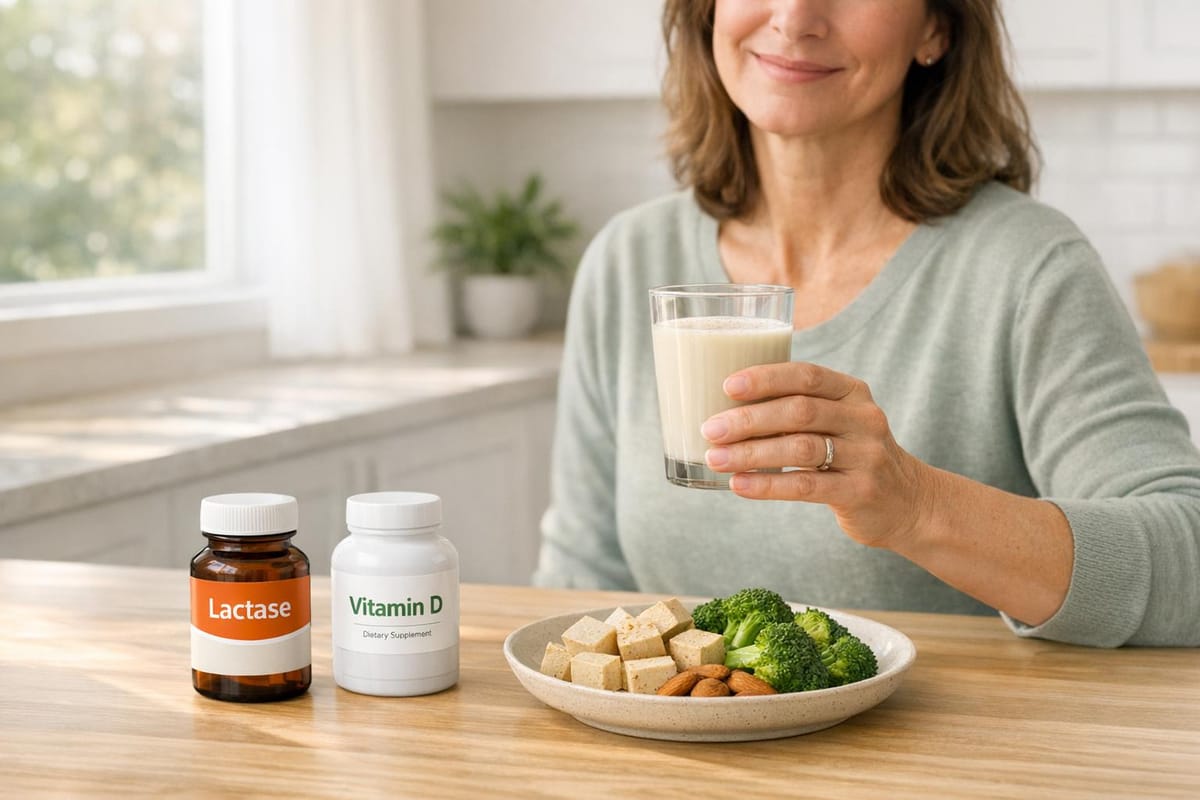
If you're lactose intolerant, avoiding dairy can put your bone health at risk due to reduced calcium and vitamin D intake. But there are ways to maintain strong bones without digestive discomfort. Here's how:
- Lactase Supplements: Products like milktab can help you digest dairy, allowing you to benefit from its calcium and vitamin D content. One cup of milk, for example, provides 30% of your daily calcium needs.
- Non-Dairy Calcium Sources: Leafy greens, canned fish (with bones), calcium-set tofu, almonds, and fortified plant-based milks are excellent options. For example, 1/2 cup of calcium-set tofu delivers over 400 mg of calcium.
- Boost Vitamin D: Fatty fish, fortified foods, and sunlight exposure (10–30 minutes daily) support calcium absorption and bone health.
Meeting your daily calcium (1,000–1,200 mg for adults) and vitamin D (600–800 IU) goals is achievable with a mix of these strategies. Whether you choose lactase pills or non-dairy options, it's all about making smart dietary choices for healthier bones.
What can I do if I don't like dairy or am lactose intolerant? | Norton Orthopedic Care
Why Calcium and Vitamin D Matter for Your Bones
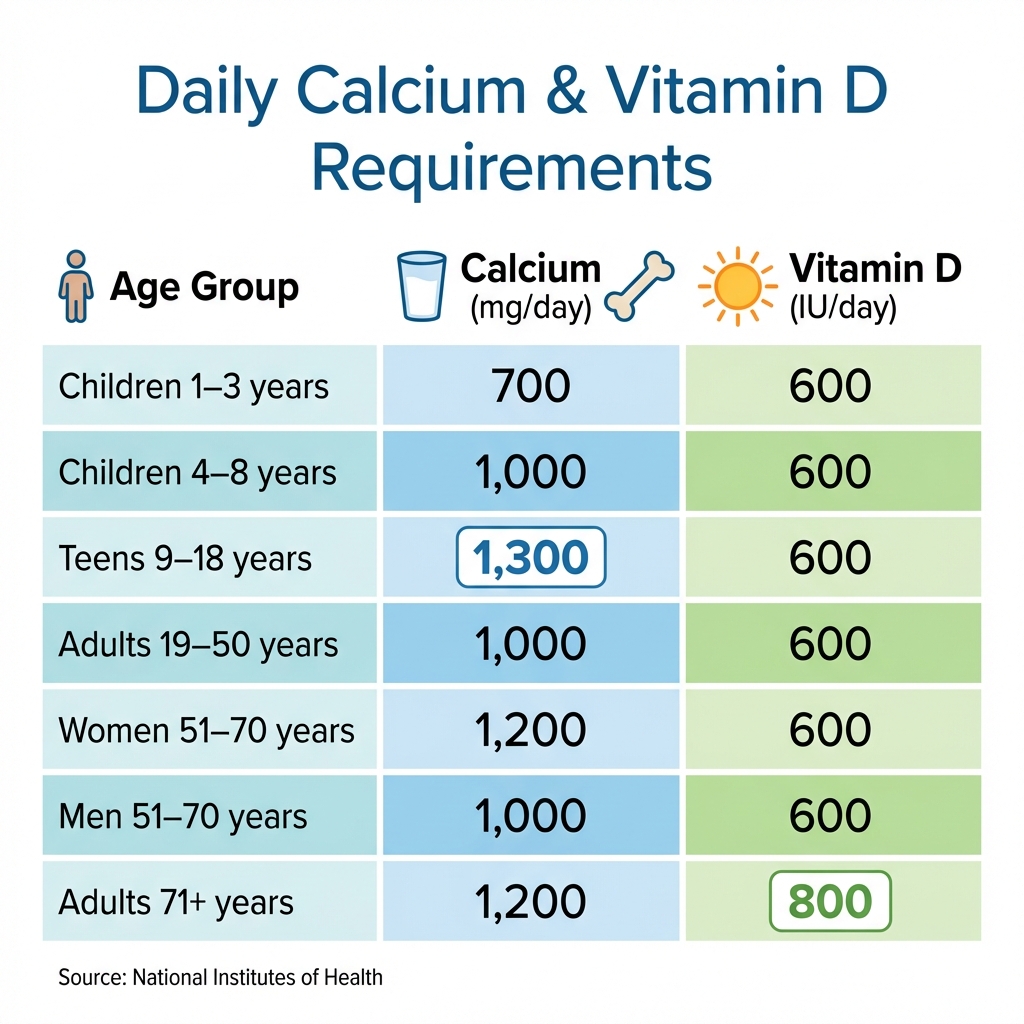
Daily Calcium and Vitamin D Requirements by Age Group
Your bones are far from being lifeless structures - they're dynamic tissue, constantly breaking down and rebuilding. In fact, your entire skeleton regenerates itself roughly every 10 years. This ongoing process requires a consistent supply of calcium and vitamin D, making these two nutrients essential for maintaining bone health throughout your life.
How Calcium Builds and Maintains Bone Strength
Calcium is the cornerstone of strong bones, with about 99% of your body's calcium stored in bones and teeth. It combines with phosphate to form calcium phosphate, a compound that gives bones their hardness. Since your body can't produce calcium on its own, you need to get it from your diet or supplements.
When calcium intake falls short, your body prioritizes critical functions - like keeping your heart beating, muscles contracting, and nerves firing - by pulling calcium from your bones. Over time, this depletion can weaken bones and increase the risk of osteoporosis. The National Institute of Arthritis and Musculoskeletal and Skin Diseases explains:
"If we do not get enough calcium in our diets, our body takes the calcium we need from our bones. Over time, this process makes bones weaker and raises the risk of osteoporosis".
Timing is key when it comes to calcium. By age 16, most people have already built 95% of their adult bone mass, with a significant portion - up to one-third - developing during the rapid growth of puberty at a rate of 300–400 mg per day. Bone density peaks between ages 25 and 35, after which it gradually declines. Women face a particularly steep decline, losing 3% to 7% of their total bone mass annually during the 7 to 10 years around menopause.
How Vitamin D Helps Your Body Absorb Calcium
Vitamin D plays a critical role in helping your body absorb calcium from the food you eat. Without enough vitamin D, your digestive system can only absorb about 15% to 20% of dietary calcium.
But vitamin D does more than aid calcium absorption. It also strengthens muscles, reducing the risk of falls that could result in fractures in fragile bones. A lack of vitamin D can lead to serious conditions: rickets in children, which causes soft and deformed bones, and osteomalacia in adults, resulting in weak, painful bones and muscles. For individuals who avoid dairy - often the primary source of both calcium and vitamin D - this deficiency can significantly increase the risk of bone density loss, especially for those who are lactose intolerant.
| Age Group | Calcium (mg/day) | Vitamin D (IU/day) |
|---|---|---|
| Children 1–3 years | 700 | 600 |
| Children 4–8 years | 1,000 | 600 |
| Teens 9–18 years | 1,300 | 600 |
| Adults 19–50 years | 1,000 | 600 |
| Women 51–70 years | 1,200 | 600 |
| Men 51–70 years | 1,000 | 600 |
| Adults 71+ years | 1,200 | 800 |
Source: National Institutes of Health
Solution 1: Use milktab Lactase Pills to Digest Dairy Products
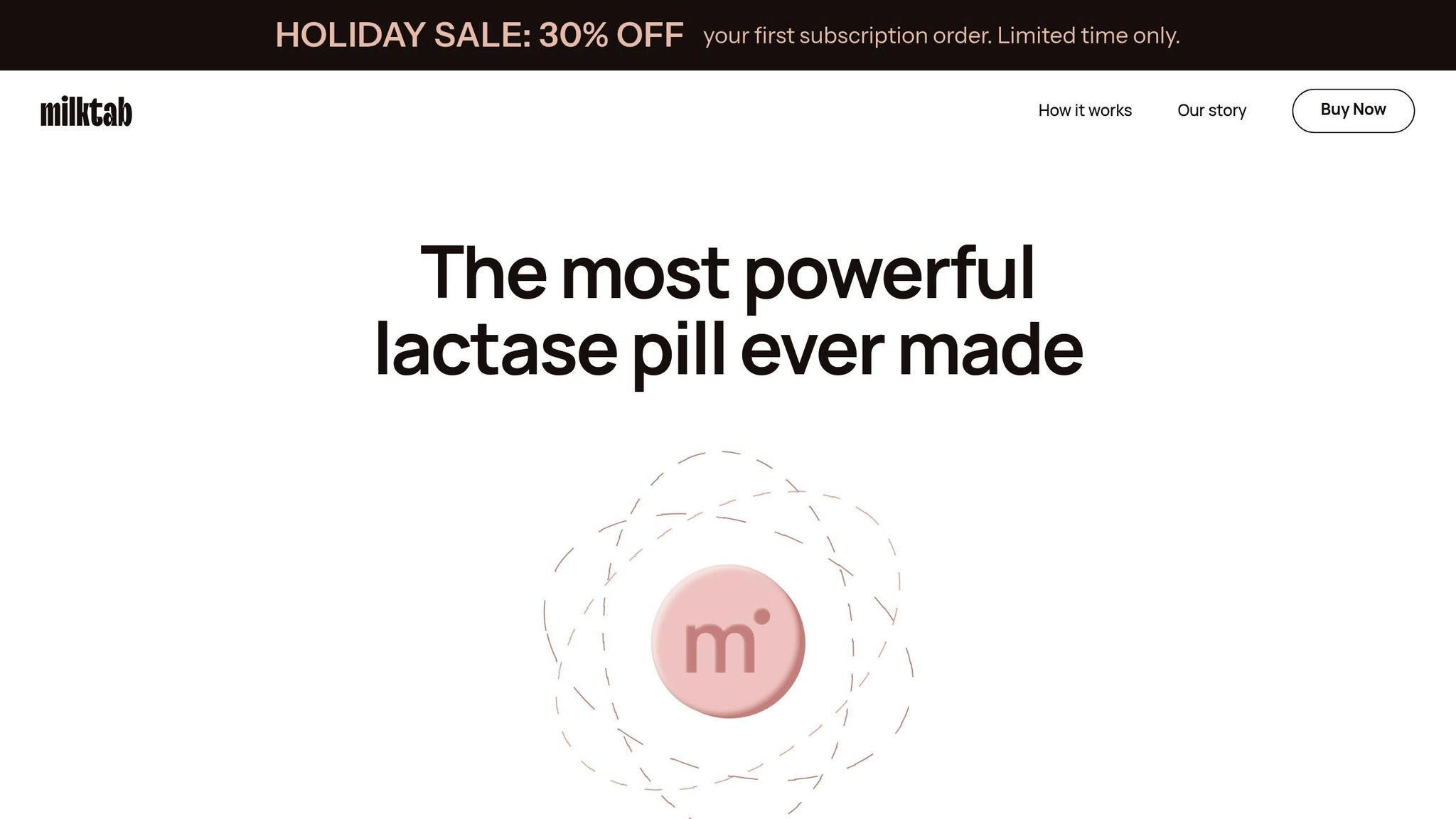
If you're lactose intolerant, skipping dairy might seem like the easiest solution. But doing so can mean missing out on essential nutrients like calcium and vitamin D. For example, just one cup of cow's milk provides about 300 mg of calcium, which is 30% of the daily requirement for most adults. Instead of cutting dairy out entirely, milktab lactase pills offer a way to enjoy dairy while still getting its natural bone-strengthening benefits. Here's how milktab can make dairy digestion easier and support your overall health.
How milktab Works
milktab uses a specialized triple-enzyme formula to break down the key components of dairy:
- Lactase: 27,000 FCC units to digest lactose (milk sugar)
- Protease: 22,000 FCC units to handle dairy proteins
- Lipase: 1,000 FCC units to process milk fats
Simply take a milktab pill right before consuming dairy. This activates the enzymes, helping you avoid the unpleasant symptoms like cramps, bloating, gas, and diarrhea that often accompany lactose intolerance. Plus, milktab is vegan, non-GMO, FODMAP-free, and third-party tested to ensure quality and effectiveness.
How milktab Supports Bone Health
By making dairy digestible, milktab plays a crucial role in maintaining bone health. Research shows that adding just one extra serving of milk daily can lower the risk of hip fractures by 8% in older adults. Without digestive aids like milktab, those with lactose intolerance may absorb up to 56% less calcium from high-lactose foods.
Dairy isn’t just about calcium - it’s a powerhouse of bone-friendly nutrients like magnesium and phosphorus, which work together to support bone density. With milktab, you can meet your daily calcium needs (700–1,300 mg, depending on age) without solely relying on non-dairy alternatives. This helps prevent the loss of bone mineral density and reduces the risk of fractures that often come with avoiding dairy.
milktab Pricing Options
milktab offers flexible pricing to suit different needs:
- A 45-pill box costs $29.
- Save 10% when you buy 2 boxes or 20% with 3 boxes.
You can take up to 2 pills daily, making it easier to reintroduce dairy into your diet without discomfort.
Solution 2: Get Calcium from Non-Dairy Foods
If you're steering clear of lactase pills or simply want to diversify your calcium sources, there are plenty of non-dairy options that are easy for the body to absorb. Adults between 19 and 50 need about 1,000 mg of calcium daily, while women over 50 and men over 70 should aim for 1,200 mg.
Best Non-Dairy Calcium Sources
Leafy greens are some of the most nutrient-packed plant-based calcium options. Opt for low-oxalate greens like collard, kale, and turnip greens, as they allow for better calcium absorption than high-oxalate varieties like spinach. Collard greens, in particular, are loaded with calcium.
"Dark green leafy vegetables are excellent sources of calcium and also include many essential vitamins." - William Kormos, M.D., Editor in Chief, Harvard Men's Health Watch
Canned fish with edible bones is another excellent option. For example, a 3.75-ounce can of sardines packs 351 mg of calcium - about 35% of your daily needs. Similarly, canned salmon with bones contains around 183 mg per 3-ounce serving. The canning process softens the bones, making the calcium easier for your body to absorb.
Calcium-set tofu is a standout choice for non-dairy calcium. Check the label for "calcium sulfate" in the ingredients, as this indicates the tofu has been processed with calcium. Just half a cup of calcium-set tofu can deliver over 421 mg of calcium, while regular tofu provides much less - only about 26 mg per 100 grams.
Other options include almonds (76 mg per ounce), chia seeds (127 mg per tablespoon), amaranth (116 mg per cooked cup), and navy beans (125 mg per cup).
| Non-Dairy Food Source | Serving Size | Calcium Content |
|---|---|---|
| Tofu (calcium-set) | 1/2 cup | 421 mg |
| Sardines (canned with bones) | 3.75 oz | 351 mg |
| Collard Greens (cooked) | 1 cup | 268 mg |
| Canned Pink Salmon (with bones) | 3 oz | 183 mg |
| Chia Seeds | 1 tbsp | 127 mg |
| Navy Beans | 1 cup | 125 mg |
| Almonds | 1 oz (23 nuts) | 76 mg |
For even more options, fortified foods can help you meet your calcium and vitamin D needs efficiently.
Fortified Foods That Provide Calcium and Vitamin D
Fortified foods are a convenient way to get both calcium and vitamin D without relying on dairy. Many plant-based beverages, cereals, and juices are fortified to deliver nutrient levels similar to or higher than cow's milk.
Fortified plant milks - like soy, almond, and oat milk - often contain 300–450 mg of calcium per 8-ounce serving. The type of calcium used for fortification matters: calcium carbonate is absorbed just as well as the calcium in cow's milk, while tricalcium phosphate may be slightly less efficient. Always check the label to ensure the product includes both calcium and vitamin D.
"Plant-based beverages can be great sources, just like cow's milk, but you want to make sure they are fortified." - Tara M. Schmidt, RDN, LD, Mayo Clinic
Fortified orange juice provides about 300–349 mg of calcium per 8-ounce glass, making it comparable to a cup of milk. Orange juice fortified with calcium citrate malate is especially effective, as it offers better absorption than other fortification methods. However, keep in mind that orange juice is high in sugar and lacks fiber, so moderation is key.
Fortified breakfast cereals can also be a powerful source of calcium. Some varieties pack as much as 1,000 mg - 100% of your daily requirement - into a single serving. Be sure to read the nutrition label to ensure the cereal includes both calcium and vitamin D.
To maximize your calcium intake, try using fortified plant milks in place of water when making oatmeal, creamy soups, or smoothies. Spreading your calcium intake across multiple meals throughout the day can also improve absorption.
Solution 3: Increase Vitamin D Through Food and Sunlight
Vitamin D plays a key role in calcium absorption, which is essential for maintaining strong bones and proper muscle function - especially for those who avoid dairy products. Let’s look at how you can boost your vitamin D levels through food and sunlight.
Foods That Contain Vitamin D
Fatty fish are one of the best natural sources of vitamin D. Options like salmon, trout, tuna, and mackerel can help you reach the recommended daily intake of 600 IU (15 mcg) for individuals aged 1–70, and 800 IU (20 mcg) for those over 70. However, be cautious not to exceed 4,000 IU per day, as this can lead to issues like kidney stones.
Egg yolks also contribute some vitamin D. That said, most of the vitamin D in the typical American diet comes from fortified foods. For instance, fortified plant-based milks - such as soy, almond, rice, and coconut - often provide between 101 and 120 IU per serving. Other fortified options, like orange juice, breakfast cereals, and lactose-free dairy products, make it easier to meet your vitamin D needs even if you’re not consuming traditional dairy.
"Vitamin D helps your body absorb calcium. Eat foods that provide the right amounts of calcium, vitamin D, and protein. This kind of diet will give your body the building blocks it needs to make and maintain strong bones."
– MedlinePlus
Getting Vitamin D from Sunlight
Spending 10–30 minutes in the sun each day can naturally boost your body’s vitamin D production. This becomes especially important during the fall and winter months (October to March), when sunlight is less available in many parts of the U.S., particularly in the Midwest.
If you live in an area with limited sunlight or spend much of your time indoors, fortified foods and supplements may be necessary. In such cases, it’s wise to consult with your healthcare provider. During the winter, the Department of Health advises everyone aged 5 and older to take a daily supplement of 10 mcg of vitamin D to compensate for reduced sun exposure.
Sample Daily Meal Plans for Strong Bones
Hitting your daily calcium and vitamin D goals is absolutely doable. The trick? Spread out your intake throughout the day. Your body absorbs calcium better in smaller doses - ideally 500 mg or less at a time.
Meal Plan 1: Dairy and Non-Dairy Mix
Breakfast: Start your day with oatmeal made using 1 cup of cow's milk (take a milktab pill if needed) and sprinkle 1 tablespoon of chia seeds on top. Pair it with 1/2 cup of fortified orange juice on the side for a total of 680 mg of calcium.
Lunch: Toss together a salad featuring 1 cup of cooked kale, 3 oz of canned pink salmon (with bones), and some white beans. The salmon not only adds calcium but also provides vitamin D, contributing about 300 mg of calcium overall.
Snack: Choose between 8 oz of low-fat yogurt (with a milktab pill if necessary) or a handful of almonds (around 23 nuts). The yogurt alone gives you approximately 275 mg of calcium.
Dinner: Whip up a stir-fry using 1/2 cup of calcium-set tofu, broccoli, and bok choy, served over quinoa. Calcium-set tofu packs a punch with around 434 mg of calcium, helping you easily meet your daily target.
Meal Plan 2: Dairy-Free Options
Breakfast: Blend a smoothie with 1 cup of fortified soy milk, a dollop of almond butter, and a serving of fortified breakfast cereal. This combo delivers about 400 mg of calcium to kick off your day.
Lunch: Wrap up 1/2 cup of calcium-set tofu and 1 cup of cooked collard greens in a whole-grain tortilla. Add a side of orange slices - collard greens alone bring 268 mg of calcium per cup.
Snack: Munch on 5 dried figs paired with a handful of sunflower seeds. Figs are naturally sweet and provide 70 mg of calcium.
Dinner: Serve 3 oz of canned sardines (with bones) on fortified whole-grain toast, alongside roasted turnip greens and a glass of fortified orange juice. Sardines contribute 324 mg of calcium, while the fortified orange juice adds another 349 mg, easily covering your daily needs.
"If you're not getting enough calcium through your diet, your body starts withdrawing it from your bones to keep blood levels stable. Over time, that can lead to weakened bones." – Tara M. Schmidt, RDN, LD, Mayo Clinic
With these meal plans, you can effortlessly meet your calcium and vitamin D requirements whether you incorporate dairy (with the help of milktab) or stick to non-dairy sources. These practical options make it easier to maintain strong bones while managing lactose intolerance.
Conclusion
Maintaining strong bones hinges on getting enough calcium and vitamin D, but lactose intolerance doesn’t mean you have to fall short. The real task lies in avoiding dairy while ensuring you find effective alternatives.
Fortunately, you have plenty of options. You can still enjoy dairy by using milktab lactase pills, which feature a triple-enzyme formula to help you digest dairy comfortably and tap into its rich calcium content. If dairy isn’t for you, there are plenty of non-dairy sources to turn to. Fortified plant-based milks, leafy greens like kale and collards, calcium-set tofu, and canned fish with bones are all excellent choices. To make the most of these sources, aim to spread your calcium intake throughout the day for better absorption. And don’t overlook vitamin D - it’s just as critical. A daily dose of sunlight (10–15 minutes) or foods like salmon and egg yolks can help ensure your body uses calcium effectively.
"If you do not get enough calcium in your diet, your body takes the calcium it needs from your bones. Over time, this process makes bones weaker." – NIAMS
FAQs
What are the best sources of calcium for people with lactose intolerance?
If you're lactose intolerant, you can still support strong bones by including calcium-rich, non-dairy foods in your meals. Some great choices are green leafy vegetables like broccoli, kale, and spinach. You can also turn to calcium-set tofu and almonds for a boost. Another surprising source? Canned fish like sardines and salmon - just make sure to eat them with the bones for maximum calcium.
You might also consider fortified foods to help meet your daily calcium needs. Many plant-based milks, such as soy or almond milk, as well as certain cereals and fruit juices, are enriched with calcium. These options make it easy to maintain bone health without relying on dairy.
How can I increase my vitamin D levels to improve calcium absorption?
To maintain healthy vitamin D levels and aid calcium absorption, it's important to rely on a combination of dietary sources, sunlight, and supplements when necessary. Vitamin D plays a key role in helping your body effectively absorb calcium, which is vital for keeping your bones strong and healthy.
You can get vitamin D from foods like fortified milk, cereals, and plant-based alternatives, along with fatty fish such as salmon and sardines. Spending about 10–15 minutes in the sun a few times a week also triggers your body to produce vitamin D naturally. However, factors like the time of year, your location, and skin tone can influence how much vitamin D your body makes from sunlight.
If you're lactose intolerant, fortified non-dairy options or supplements can help you meet your vitamin D and calcium needs. Additionally, lactase pills can make consuming dairy more manageable while supporting bone health. It's always a good idea to consult a healthcare professional to determine what approach works best for you.
How can milktab support bone health for people with lactose intolerance?
Milktab makes it possible for lactose-intolerant individuals to enjoy dairy without the discomfort, while also supporting bone health. These lactase pills work by efficiently breaking down lactose, ensuring easier digestion of dairy products. This allows the body to better absorb essential nutrients like calcium and vitamin D - key players in maintaining strong, healthy bones.
Each pill is packed with a blend of enzymes, including lactase, protease, and lipase, designed to aid overall digestion. Compact and vegan-friendly, Milktab offers a convenient way for those with lactose intolerance to incorporate more dairy into their diet, helping them meet nutritional needs without hassle.